
Hot water is essential for everyday life, whether it’s for showering, washing dishes, or doing laundry. But not all water heaters are created equal. With advancements in technology, homeowners in need of water heater replacement in Sussex County, DE now have multiple options for heating water efficiently. The three primary types of water heaters—tanked, tankless, and heat pump water heaters—each operate differently and offer distinct benefits.
Tanked Water Heaters
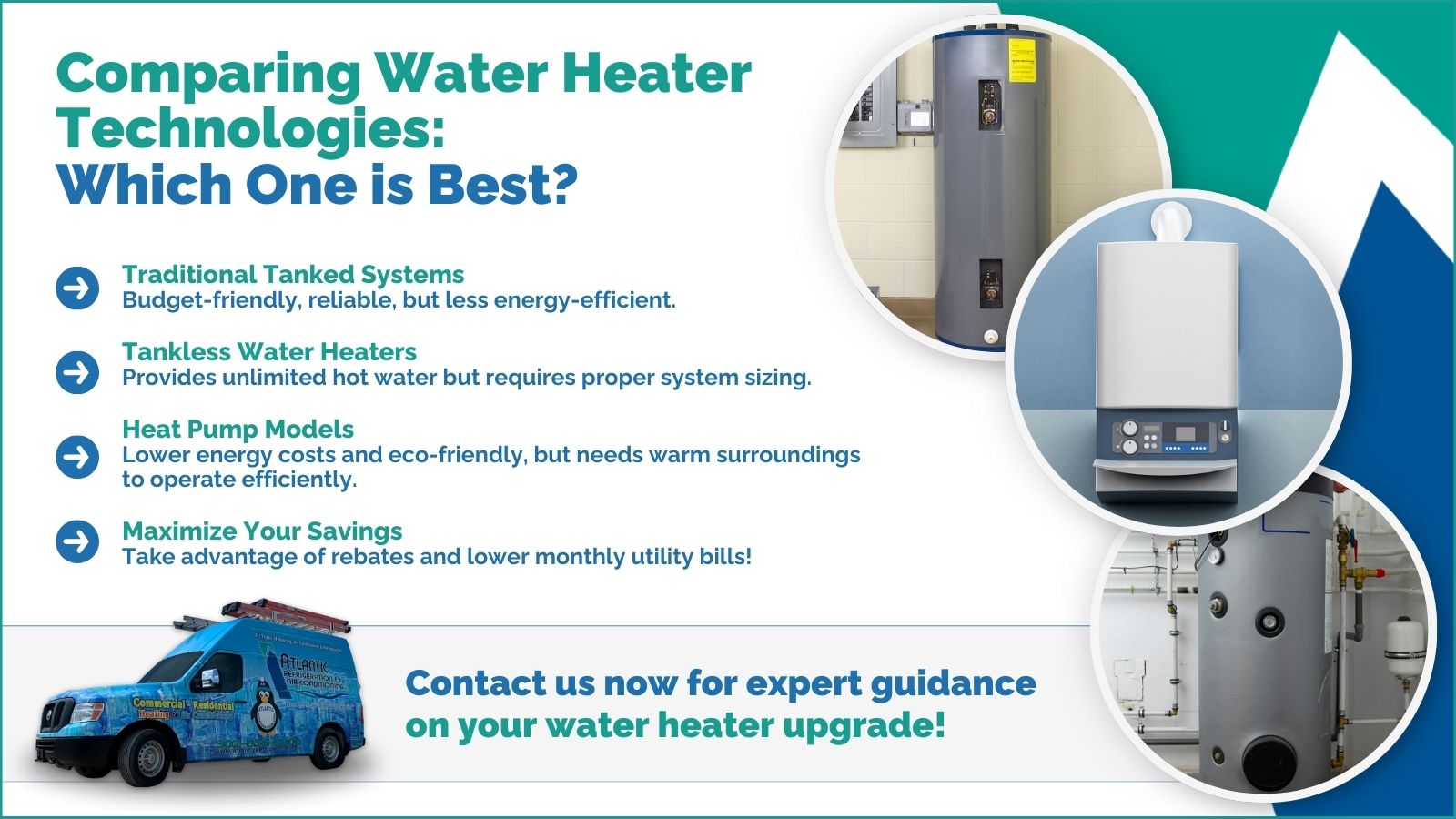
Tanked water heaters, also known as storage water heaters, are the most common type found in homes. They work by storing a set amount of hot water (typically between 30 and 80 gallons) in an insulated tank. A heating element (either gas or electric) keeps the water at a preset temperature, so it’s ready for use whenever needed.
Pros:
- Lower initial cost compared to other options
- Simple installation and maintenance
- Reliable supply of hot water for multiple uses at once
Cons:
- Higher energy consumption due to standby heat loss (keeping water hot even when not in use)
- Limited hot water supply—once the tank is empty, you have to wait for it to refill and reheat
- Larger footprint, requiring adequate space for installation, especially compared to a tankless system that saves space.
Tankless Water Heaters
Tankless water heaters, also known as on-demand water heaters, provide hot water only when needed. Instead of storing water, they heat it as it flows through the unit using high-powered burners or electric elements. This eliminates the need for a storage tank and minimizes energy waste, making it a high-efficiency tankless option for many households.
Pros:
- Higher energy efficiency, as water is only heated when needed
- Unlimited hot water supply, as long as the unit is properly sized
- Compact design, saving space in the home
Cons:
- Higher upfront cost than traditional tanked models
- May struggle to keep up with simultaneous hot water demands in larger households
- Requires a larger gas line or electrical upgrade in some cases
Heat Pump Water Heaters
Heat pump water heaters (HPWHs) are one of the most energy-efficient options available. Instead of generating heat directly, they work like a refrigerator in reverse—extracting heat from the surrounding air and transferring it to the water. Because they rely on existing heat rather than creating it from scratch, they use significantly less electricity.
Pros:
- Extremely energy efficient, using up to 60% less energy than standard electric water heaters
- Lower long-term operating costs
- Environmentally friendly option with reduced carbon footprint
Cons:
- Higher upfront cost than traditional models
- Requires adequate space and airflow for proper operation
- May not work efficiently in colder environments, as they rely on ambient heat
Which Water Heater Is Right for You?
Choosing the best water heater for your home depends on several factors, including household size, hot water demand, available space, and budget. While tanked water heaters remain the most affordable upfront, tankless and heat pump models offer long-term energy savings. If reducing energy costs and environmental impact is a priority, a heat pump water heater replacement may be the best investment.
Looking to upgrade your water heater? Reach out to us to find out how to get up to $1,100 in water heater rebates! Investing in an energy-efficient model not only saves money on utility bills but also helps the environment. Whether you need a standard replacement or a high-efficiency upgrade, we’re here to help you make the best choice for your home.
Frequently Asked Questions
Question: What are the main differences between tanked, tankless, and heat pump water heaters?
Answer: Tanked water heaters store and heat a large volume of water ready for use, tankless heaters heat water on demand as it flows through the unit, and heat pump water heaters use electricity to move heat from the surrounding air into the water for greater energy efficiency.
Question: What are the advantages of traditional tanked water heaters?
Answer: Tanked water heaters are typically more affordable to purchase and install, provide a ready supply of hot water, and are a familiar, proven technology for many households.
Question: Why might a homeowner choose a tankless water heater?
Answer: Tankless water heaters save energy by heating water only when needed, reduce standby heat loss, take up less space, and can last longer than conventional tanked models.
Question: How do heat pump water heaters save on energy costs?
Answer: Heat pump water heaters use ambient heat from the air to warm water, making them far more energy efficient than conventional electric heaters and potentially lowering utility bills.
Question: Are there any limitations with heat pump water heaters?
Answer: Heat pump water heaters work best in moderate climates and need adequate space, and they generally have higher upfront costs compared to traditional tank heaters despite long-term savings.
Schedule an appointment with Atlantic Refrigeration & Air Conditioning, Inc.